New
Le Syndrome de Bonnard
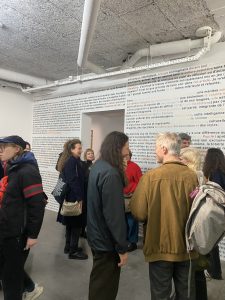
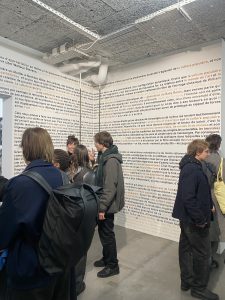
Le Classisme, an Introduction (2015), a site-variable work first
installed at Villa du Parc in 2015 and purchased by the FRAC Île
de France (Le Plateau) in 2017.
It is said that Pierre Bonnard never stopped revisiting his paintings throughout his life. One anecdote in particular recounts how he was arrested by a security guard at the Musée du Luxembourg while attempting to surreptitiously retouch a tiny leaf in one of his paintings. In Practicalities (La Vie matérielle), Marguerite Duras recalls the story of a painting that Bonnard significantly altered without consulting the patrons who commissioned it. She reminds us that creativity rarely follows a straight path: ‘It happens in a book, at a turning point in a sentence: you change the subject of the book. (…) Paintings and writings are not created in complete clarity.’
These accounts bring together several legitimate perspectives: on the one hand, the institution that guarantees the conservation of the acquired work and its inclusion in a historical narrative as part of our heritage; on the other hand, the artist’s individual journey, which can involve significant shifts in their practice; and finally, the interpretation of the audience, which varies according to the era, geographical area, and so on.
Drawing on the Frac Île-de-France collection, Le Syndrome de Bonnard considers how artworks evolve after they have been acquired. Can artists re-examine the trial and error of their studio practice once their work has been catalogued? How can certain works be constantly revisited, reactivated and updated? And what about the change in perception of a work in light of the evolution of our political, social, and environmental context? Ten years after staging a first exhibition devoted to these issues¹, Le Bureau/ is revisiting the theme and deepening its reflection on the impermanence of works of art at Le Plateau and Les Réserves.
From a contemporary perspective, ‘Bonnardism’ refers not only to an obsessive relationship to work or endless research, but also to the reorientations that occur within the ‘authorised narratives’² of the work: these include the diversifications of a practice, the wear and tear or transformation of materials, new interpretations that can be activated within the context of immaterial works, the evolution of the way works are viewed in relation to societal changes, and the continuous collaboration between artists and institutions regarding decisions such as whether to exhibit, restore or adapt works…
Spread across the Frac’s two sites, the exhibition showcases the unique features of each location: at Le Plateau in Paris, historically dedicated to production, it highlights artists’ trajectories and their relationship to time and context; at Les Réserves in Romainville, where the collection is preserved, it examines the materiality of the works and the institution’s responsibilities.